
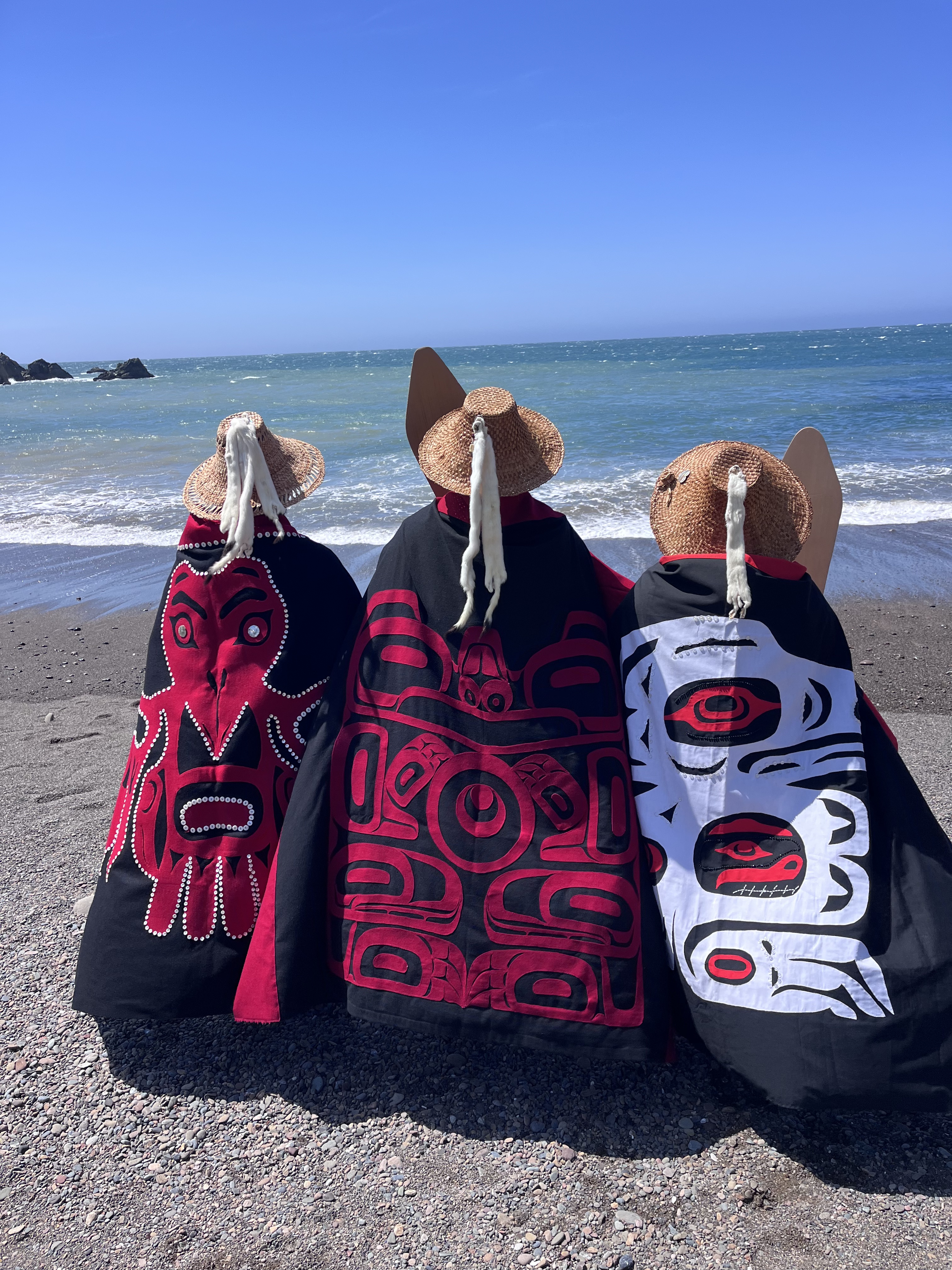
Bylaws of the California Drums Alaska Native Dance Group
Article 1. Name
The name of this organization is the California Drums Alaska Native Dance Group (the “Organization”).
Article 2. Purpose
The purpose of the California Drums Alaska Native Dance Group is to preserve, practice, and share Alaska Native songs, drumming, and dances, including related Haida songs and cultural expressions from Canada; to honor ancestral traditions; and to foster a respectful and inclusive community for Haida, Tlingit, Tsimshian, and other Alaska Native participants.
The Organization shall operate in accordance with its Cultural Protocol and Practice Guidelines (Appendix A), which guide cultural practice. The Appendix may be amended by the Board of Directors in consultation with recognized culture-bearers, Elders, and knowledge holders. The Board shall not override cultural determinations made by such culture-bearers.
Article 3. Membership
The Organization recognizes both general members and voting members, as defined below.
a) The California Drums Alaska Native Dance Group welcomes individuals who are interested in Haida, Tlingit, and Tsimshian dancing, singing, and drumming and who agree to uphold the cultural values, protocols, and responsibilities of the group.
b) Admission to membership shall follow the process outlined in the Membership Policy and shall be confirmed by the Board of Directors.
c) Voting membership and eligibility to hold office are reserved for enrolled Alaska Native tribal members and/or individuals of lineal descent to Haida, Tlingit, or Tsimshian peoples, in recognition of cultural stewardship and continuity. (Tribal enrollment/membership card; CIBD; tribal letter from council; genealogical and/or vital records)
d) Members in good standing may attend general and special meetings. Voting members may vote on matters before the membership and are eligible to hold office and serve on committees.
e) Members may attend meetings of the Board of Directors and participate in discussions at the discretion of the Board, but without a vote.
f) The Board may suspend or terminate membership for cause, including violations of group values, cultural protocol, or conduct detrimental to the Organization, following reasonable written notice, an opportunity to be heard, and a good-faith determination by the Board.
Article 4. Meetings of the Membership
The Annual Meeting of the Membership shall be held each year in the month of August in conjunction with the group’s anniversary celebration, for the purpose of electing Officers and conducting other business.
Other business requiring discussion or decision may be brought before the membership during regular monthly practices or at special meetings, held either in person or via electronic means, as determined by the Board.
A quorum for any meeting of the membership shall consist of 20% of voting members present in person or by electronic means.
Article 5. Board of Directors
a) The affairs of the Organization shall be managed by a Board of Directors consisting of the Officers and up to five (5) Board Members at Large.
b) The Board shall have authority to:
- conduct the business of the Organization;
- establish schedules and meeting dates;
- set annual dues and fees;
- approve expenditures; and
- carry out the purposes of the Organization.
c) The annual membership fee shall be five dollars ($5.00), collected yearly. Fees shall be used to support dance activities and community gatherings and may be adjusted by majority vote of the Board.
d) In the event of a vacancy on the Board, the remaining Board members may exercise the powers of the full Board. The vacancy may be filled by majority vote of the Board until the next regular election.
e) A member of the Board may be removed from office after reasonable notice and an opportunity to be heard by either:
- a majority vote of the membership; or
- a two-thirds (2/3) vote of the entire Board.
f) There shall be up to five (5) Board Members at Large. The number may be changed by majority vote of the Board. Board Members at Large shall serve one-year terms and may be re-elected.
Article 6. Meetings of the Board
a) The Board shall meet at least two (2) times per year.
b) A majority of the total number of Directors then in office shall constitute a quorum.
c) A majority vote of Board members present at a meeting where a quorum is present shall be required to transact business. Participation and voting may occur in person or by electronic means, as permitted by law.
Article 7. Officers
The Officers of the Organization shall be President, Vice President, Secretary, and Treasurer. Officers shall serve one-year terms. Officers must be voting members in good standing as defined in Article 3.
Duties of Officers
President:
The President is the chief executive officer of the Organization and presides at meetings of the membership and Board. The President may call regular or special meetings and appoint chairs of standing or special committees.
Vice President:
The Vice President acts in the absence or incapacity of the President and shall succeed to the office if the President resigns or is unable to serve. The President may delegate duties to the Vice President as needed.
Secretary:
The Secretary maintains records, minutes of meetings, membership lists, and official notices.
Treasurer:
The Organization may have one Treasurer or Co-Treasurers, as determined by the Board. The Treasurer(s) are responsible for collecting dues, managing funds, disbursing payments as approved, advising the Board on financial matters, and preparing an annual financial report. If Co-Treasurers serve, both shall share fiduciary responsibility.
Article 8. Election of Officers and Board Members at Large
Officers and Board Members at Large shall be elected at the Annual Meeting of the Membership and shall assume office in August.
a) Two months prior to the Annual Meeting, the President shall appoint a Nominating Committee of three (3) or more members, at least one of whom shall be a Board member.
b) The Nominating Committee shall present its slate of nominees to the membership at least one month prior to the Annual Meeting.
c) Additional nominations may be made from the floor with the nominee’s consent.
d) A majority of votes cast shall be required for election.
Article 9. Fiscal Year
The fiscal year of the Organization shall be January 1 through December 31.
Article 10. Amendments
These Bylaws may be amended by a two-thirds (2/3) vote of voting members present at any meeting, provided that written notice of the proposed amendment is given at least one month in advance.
Article 11. Tax-Exempt Provisions
a) No part of the net earnings or assets of the Organization shall inure to the benefit of any private individual, director, or officer, except for reasonable compensation for services rendered.
b) Upon dissolution of the Organization, its assets shall be distributed to one or more Alaska Native organizations organized and operated exclusively for charitable or cultural purposes consistent with Section 501(c)(3) of the Internal Revenue Code.
Article 12. Principal Office
The principal office of the Organization shall be located in the State of California, at such place as the Board of Directors may determine.
Article 13. Non-Discrimination
The Organization does not discriminate on the basis of race, color, national origin, gender, age, disability, sexual orientation, or religion, except as necessary to fulfill its cultural and educational purpose.
Adopted by Membership February 21, 2026
Appendix A: Cultural Protocol and Practice Guidelines
(Referenced in the Bylaws of the California Drums Alaska Native Dance Group)
1. Purpose
This Cultural Protocol Appendix provides guidance for the respectful learning, practice, and sharing of Haida, Tlingit, Tsimshian, and related Alaska Native and Haida cultural songs, drumming, and dances. These protocols exist to honor ancestral teachings, uphold cultural responsibility, and protect the integrity of living traditions across generations and borders.
2. Cultural Authority and Stewardship
Cultural authority within the California Drums Alaska Native Dance Group rests with recognized culture-bearers, Elders, and knowledge holders within the Haida, Tlingit, and Tsimshian traditions. Decisions regarding song ownership, appropriate use, performance context, and transmission shall be guided by these individuals and by established cultural teachings.
Songs, dances, and crests are not simply artistic expressions; they are held within systems of clan, lineage, and responsibility. Cultural knowledge is carried through families, clans, and houses, and is guided by teachings passed down from ancestors.
Participation in Alaska Native cultural practice carries responsibilities, including humility, respect for Elders and knowledge holders, and an understanding that cultural authority is earned through relationship, service, and protocol—not through participation alone.
3. Learning and Teaching
Songs, dances, and drumming are taught through observation, practice, and oral instruction under the guidance of Haida, Tlingit, and Tsimshian culture-bearers, Elders, and recognized knowledge holders. Some songs or dances may have specific conditions or ceremonial contexts and may not be shared publicly. Members are expected to respect these distinctions and seek guidance when uncertain.
4. Protocol for Songs and Dances
a) Only songs and dances that the group has been given permission to learn or share may be practiced or performed.
b) Songs that are clan-owned, family-owned, or held under specific cultural responsibility shall be used only in accordance with those teachings.
c) Crests, regalia, and designs associated with specific clans or families shall be worn or displayed only with appropriate understanding and respect.
d) Songs and dances may be retired, restricted, or adapted as guidance changes.
5. Inclusion of Canadian Haida
The California Drums Alaska Native Dance Group recognizes that Haida people are one people whose homelands span what is now known as Alaska and Canada.
Haida songs, dances, and teachings originating from Haida Gwaii (Canada) are honored and included when shared through proper relationships, permissions, and cultural protocol. Colonial borders do not define Haida identity, authority, or cultural continuity.
Guidance from Haida knowledge holders—regardless of present-day national boundaries—shall be followed.
6. Inclusion and Participation
The group welcomes learners and supporters who approach the work with humility, respect, and openness. Participation does not confer cultural ownership or authority. Leadership, teaching, and decision-making regarding cultural matters shall follow protocol and cultural responsibility.
7. Public Performance and Representation
Public performances, recordings, or sharing of songs and dances—including on social media—shall be done only with approval from designated cultural leaders or the Board in consultation with culture-bearers. The group shall strive to represent the cultures with accuracy, respect, and dignity.
8. Conduct and Accountability
Members are expected to conduct themselves in ways that uphold respect for the songs, dances, regalia, one another, and the communities represented. Actions that violate cultural protocol, misuse songs, or cause harm to individuals or the group may result in corrective guidance, restriction of participation, or other actions as determined by the Board in consultation with cultural advisors.
9. Living Document
This Appendix is a living document. Protocols may evolve as teachings, relationships, and guidance deepen. Updates may be made by the Board in consultation with Haida, Tlingit, and Tsimshian cultural advisors and shared with the membership.